“Midlife is not a crisis. It’s an unraveling.” – Brené Brown
October marked World Menopause Month – a timely reminder to prioritise women’s wellbeing and to normalise conversations about menopause, perimenopause, and midlife transition. Awareness is growing, yet many women still describe a quiet gap between information, empathy, and lived experience.
I’ve lost count of the number of women – colleagues, clients, friends, family – who have shared how this phase has taken them by surprise. Unexpected tears in the car on the way to work. Waves of nostalgia that feel almost physical. A sense of restlessness or emotional sensitivity that doesn’t quite fit familiar explanations. Not sadness exactly – but something deeper. The ache of transition. The recognition that something is shifting.
Recently, I dreamt my boys – still young – were teenagers beginning to pull away from me. I woke in tears. My psychologist brain understood this as developmentally normal; my mother’s heart felt the grief anyway. It reminded me of conversations broadcaster Amanda Keller has shared publicly about the quiet heartbreak of parenting – the way we say goodbye to each version of our children, little by little.
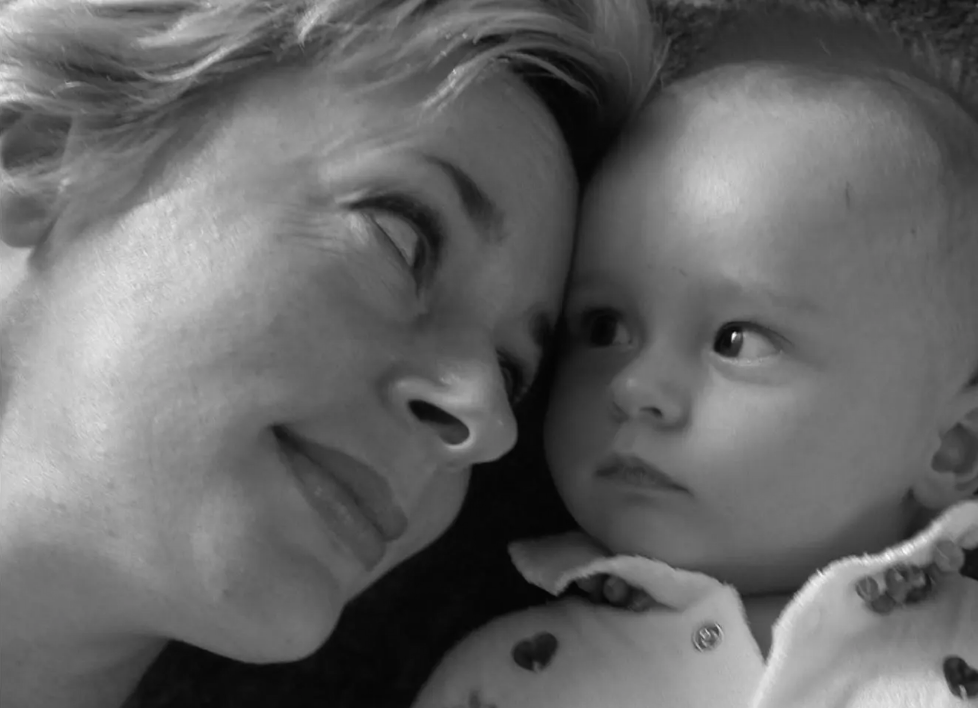
It was in moments like these that I began to recognise the emotional undercurrent of perimenopause – not loudly announced, but woven through memory, hormones, identity, and time.
Perimenopause: More Than Hot Flushes
Perimenopause is often reduced to physical symptoms alone. In reality, it is a whole-of-life transition – emotional, psychological, relational, and physical – touching nearly every layer of a woman’s identity.
In my clinical work, I see women at the height of their competence and responsibility quietly struggling with anxiety, disrupted sleep, irritability, or a sense of feeling “unsettled” without knowing why. Many say, “I should be happy… but I feel a bit lost.” What’s often happening isn’t failure or fragility – it’s recalibration. An unraveling, as Brené Brown describes it. A loosening of what no longer fits.
What Psychology Can Offer
Psychologists do not prescribe hormones or medical treatments. What we can offer is evidence-based psychological support to help women navigate the emotional and identity-related aspects of this transition.
This may include:
Supporting emotional processing and self-compassion
Strategies for anxiety, mood shifts, and sleep disruption
Evidence-based approaches such as CBT, mindfulness, and mind–body approaches for emotional regulation
Exploring identity change, values, and meaning during midlife
This work is not about “fixing” women it is about supporting resilience, insight, and self-trust.
The Cultural Conversation Is Shifting
Culturally, something important is happening. Comedian Celeste Barber uses humour to challenge unrealistic beauty standards, while Leanne Morgan brings warmth and emotional honesty to the realities of ageing, family, and change. Together, they reflect a broader shift – women speaking openly about midlife instead of shrinking around it.
Public conversations about women’s health have also been shaped by individuals like Bindi Irwin, who has spoken openly about her experience with endometriosis. Her willingness to name pain that is often minimised or misunderstood has contributed to broader awareness of the complexity of women’s health across the lifespan. While these stories are not clinical guidance, they play an important role in reducing stigma and encouraging earlier recognition, validation, and help-seeking.
Alongside this, women like Luisa Dunn have helped normalise what ageing actually looks like: silver hair, softness, texture, presence. By simply showing up as she is, she quietly disrupts the idea that women must erase time to remain visible or valued. This visibility matters – not just for women themselves, but for the generations watching and learning what ageing can mean.
As journalist Mel Doyle has reflected, in a youth-obsessed culture there is value in appreciating wisdom and experience – qualities that only come with time. Actor Kate Winslet has similarly spoken about rejecting age-erasing narratives and embracing authenticity, confidence, and self-acceptance as women grow older.
These voices do not offer clinical guidance – but they do signal a meaningful cultural re-orientation: away from perfection, and toward presence.
Recently, a reflective trend has emerged online in which women imagine their 80-year-old self waking up in their current body for just one day – often described as “I’m 80, but I woke up in my 37-year-old body.” The exercise isn’t about denial of ageing, but perspective. Women describe moving through the day with greater tenderness toward their bodies, more appreciation for energy and health, and a clearer sense of what truly matters. Psychologically, this kind of perspective-taking can be powerful – helping shift attention from self-criticism to gratitude, presence, and self-compassion.

The Invisible Load of Midlife
Alongside these cultural shifts, there has also been growing recognition at a systemic level. The introduction of reproductive leave policies in some workplaces reflects an acknowledgement that women’s health experiences – including menstruation, endometriosis, fertility treatment, pregnancy loss, and menopause – intersect with working life in real and ongoing ways. While access remains inconsistent, these developments mark an important step toward legitimising women’s health as a workplace wellbeing issue, rather than a private burden to be managed in silence.
For many women, this stage of life coincides with significant external demands: career responsibility, parenting transitions, caring for ageing parents, and changing relationships. Psychologically, this layering can heighten stress, grief, and self-doubt – not because something is wrong, but because so much is being held at once.
This is where self-awareness and mind-body approaches can be especially supportive: helping women notice patterns, regulate overwhelm, and reconnect with what matters most.
Fertility, Choice, and the Matriarchal Shift
Perimenopause can bring grief around fertility – whether that is the closing of a chapter, uncertainty about future possibilities, or reflection on choices made or not made. Yet beyond this grief, many women describe a growing sense of clarity. A shedding of roles that no longer fit. A steadier, quieter confidence.
From an evolutionary perspective, it’s striking that humans are the only known land mammals to experience true menopause – a long life after reproduction ends. This suggests that midlife is not a biological mistake, but a meaningful stage of contribution, wisdom, and social leadership.
I think of this as a matriarchal transition – not defined by age, but by lived experience. A knowing that comes from having loved, lost, learned, and continued.
A Closing Reflection
There is a quiet reckoning that arrives in midlife.
Not loud. Not dramatic.
Just a soft awareness that time is no longer abstract – it is personal.
It appears in small moments: watching your children sleep, noticing your body change, realising that the women who raised or guided you are ageing too. It arrives in grief for what has passed, and tenderness for what still remains.
In my work across psychology and grief care, I often hear people say, “I thought I had more time.” Not as regret – but as recognition.
Midlife invites us to stop waiting for permission.
Permission to take up space.
Permission to soften expectations.
Permission to live in a way that is truer, more intentional, and more aligned with who we are becoming.
This stage of life is not about becoming someone new.
It is about remembering who you were before the world asked you to be smaller.
There is wisdom here.
There is beauty here.
And there is a deep, steady strength that grows not in spite of time – but because of it.
Midlife is not an ending.
It is a return.
To ourselves.
To what matters.
To this one precious life that with grit and gumption, we are still very much living.
To learn more about psychological and mind-body approaches to wellbeing, or work with our Principal Psychologist Laura please complete our contact form
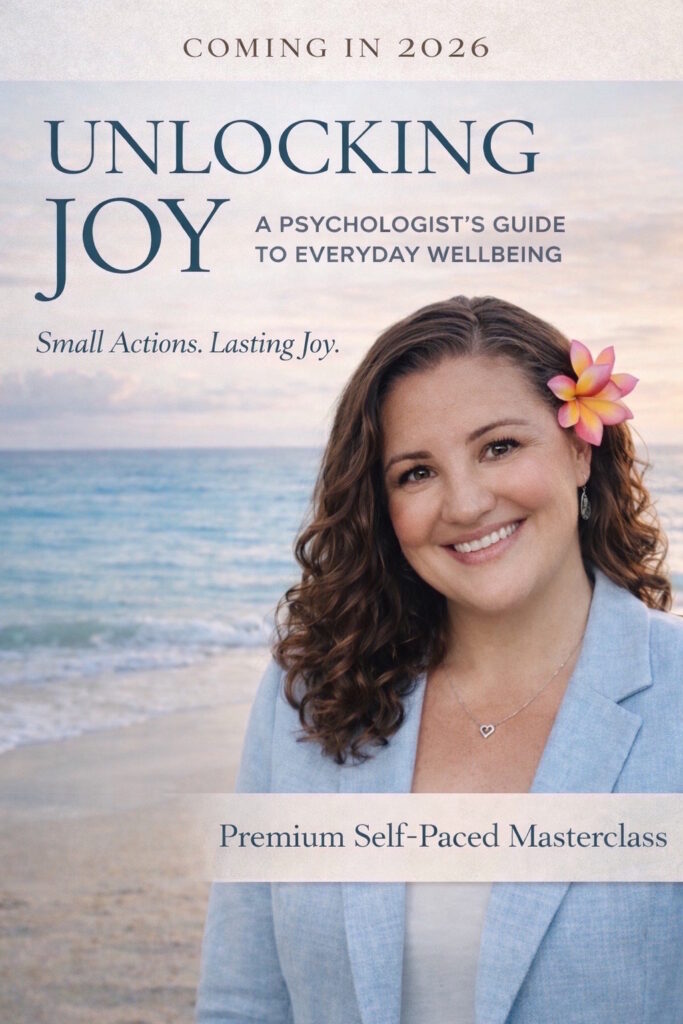
Join the waitlist for Unlocking Joy – a forthcoming program supporting everyday wellbeing for women navigating life transitions